What makes an anti raid sky settlement work in Rust and why do raiders struggle with it?
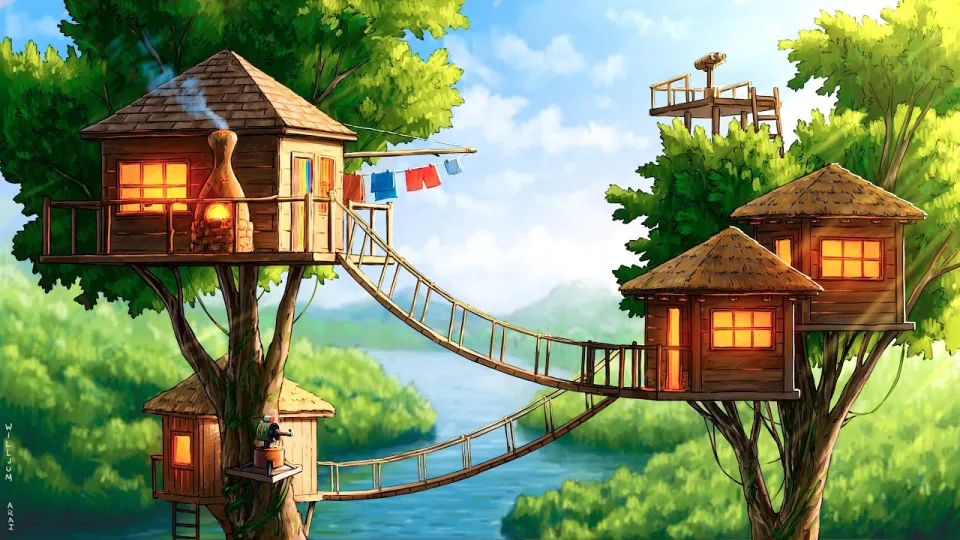
Video: I Built an anti raid sky settlement in Rust...
Want articles like this for your own video to promote it on YouTube and Google? Order them through the Telegram bot @sat_sit_bot. The bot writes and publishes the articles itself (with your YouTube video embedded) on popular topical websites (no ads). Free trial — 50 articles.
· based on the channel Willjum
A Rust anti raid sky settlement works because it forces raiders to pay full raid cost for almost no loot: the base is split into several small structures stacked high in the air, each holding a fraction of the owner's supplies, so blowing through one of them rarely justifies the explosives spent. The idea is not that the base cannot be broken — it is that breaking it is a bad trade.
Willjum, the Rust creator behind the video this breakdown is based on, builds exactly this kind of structure, and his supporters can follow the full process through the perks offered on Patreon. The concept itself is older than any single video: solo players have been stacking cheap boxes in the sky since players realised that vertical distance is the cheapest wall in the game.
What is an anti raid sky settlement in Rust?
An anti raid sky settlement is a group of small, separate bases built at height and linked by stairs, ramps, towers or jump-ups, so the owner never keeps everything in one raid-able shell. Instead of one compound with a single loot room, the player spreads storage across several mini-bases, each with its own entrance and its own cheap core.
The logic rests on three properties of Rust raiding:
- Raiders pay per wall, not per value. Splitting loot into five small bases multiplies the number of walls between a raider and anything worth taking.
- Height adds time. Climbing, jump-ups and exposed approaches slow a raid down and make noise, which attracts counter-raiders.
- Cheap structures are cheap to replace. Losing one sky box costs a few hundred stone, not a wipe.
A sky settlement is not a fortress. It is a decoy system with a storage plan behind it.
How does the sky settlement actually stop raiders?
The sky settlement does not stop raiders — it makes raiding unprofitable by raising the explosive cost per looted item far above what the loot is worth. Raiders in Rust are economically rational: most solo and duo raids are planned around profit, so a target that costs 20 rockets and returns a stack of stone gets skipped in favour of a softer base nearby.
Several mechanics do the heavy lifting:
- Vertical honeycomb. Empty floors above and below the real storage force raiders to guess which level holds anything, and every wrong guess costs more boom.
- Distributed loot. Splitting sulfur, scrap, components and guns across separate mini-bases means a single breach never ends the wipe.
- Exposed approach. Stairs and bridges to a sky base are easy to watch, so the owner often sees the raid coming and can defend or move loot.
- Low perceived value. A cluster of tiny boxes on stilts reads as a starter base, which is exactly the impression a defender wants.
How do you build one without wrecking your upkeep?
Upkeep is the real constraint on any sky settlement, because every foundation and building block adds to the hourly cost the tool cupboard charges. A tall cluster of small bases can quietly drain a solo player's stone and wood stock even when nobody raids it.
Practical steps that keep the build viable:
- Count your blocks before you commit. Build the skeleton in a creative or build server first and check the upkeep figure on the tool cupboard.
- Use stone for the shell and wood or twig for the throwaway connecting structures that only need to slow someone down.
- Keep the mini-bases small — a 1x1 or 2x1 with a single box and a sleeping bag is often enough per location.
- Place tool cupboards with authorisation coverage that does not overlap unnecessarily, since each cupboard you maintain adds cost.
- Stockpile upkeep in a hidden ground-level stash, not in the sky, so a partial raid never cuts off your own maintenance.
A sky settlement that decays because the owner cannot feed it is worse than a normal base: it advertises weakness and gives raiders free loot.
Why do raiders often skip sky bases entirely?
Raiders skip sky bases because the expected return is low, the time cost is high, and the risk of being countered while climbing is real. Most raid planning in Rust starts with a scouting pass: look at base size, guess the loot, estimate the boom. A cluster of small elevated boxes fails that test on every count.
There is also a social factor. Large clans raid for territory and for content; a sky settlement offers neither. Solo raiders raid for profit; a sky settlement offers a bad ratio. The result is that the build survives not because it is unbreakable but because it is boring to attack — and boring is a legitimate defence in a game where every raid is a gamble.
What do viewers and newer players usually ask about sky bases?
Newer players and long-time viewers of Rust content tend to raise the same handful of doubts about sky settlements, and most of them come down to effort versus payoff.
- Isn't it a lot of work to build? Yes, more than a 2x2 — but the work happens once, while the protection lasts the wipe.
- Don't you lose mobility? Somewhat. Living in the sky means longer trips to monuments, so most owners keep a small ground-level staging point for farming runs.
- Is it solo-friendly? It is one of the few designs built specifically for solo players, because it trades manpower for geometry.
- Can a clan still flatten it? Absolutely. Against a determined group with unlimited rockets, no base holds; the sky settlement only wins the economic argument against players who count their costs.
That gap between players who never touch Rust and players who raid every night is part of why the format travels so well — the storytelling carries people who have never placed a tool cupboard in their life.
Useful links
- Willjum on Patreon — supporter perks and behind-the-scenes access.
- Willjum on Twitch — live survival streams.
- Willjum on Twitter — updates and schedule posts.
- Creative Commons Attribution 4.0 — the licence covering music used in the channel's videos.
The bottom line on anti raid sky settlements
An anti raid sky settlement is a cost-management trick rather than a fortress: it splits loot, stacks empty space and makes every raider pay more than the target is worth. Willjum's take on the design, published on the Willjum channel, shows the same principle in action — small structures, cheap materials and a defender who never keeps all the sulfur in one box. If you want to follow the builds and the survival series that surround them, the supporter page at Patreon is the place to start. Build it once, feed the upkeep, and let raiders do the math.
Key takeaways
- A sky settlement is a cluster of small bases stacked high above the ground, connected by stairs, ramps or towers rather than one giant compound.
- The core defence is cost: raiders must spend rockets, C4 and boom climbing through floors they cannot loot quickly, while the owner only loses one small box.
- Splitting loot across several small bases means no single raid ends the wipe for the owner.
- Upkeep scales with every foundation and building block, so a sky settlement needs a steady supply of stone, metal and wood or it decays.
- Willjum's anti raid sky settlement build is the subject of his video on the Willjum channel, with supporter perks on Patreon.
Questions & answers
Does an anti raid sky settlement actually protect your loot in Rust?
It protects it indirectly. The structure does not stop explosives, but it splits loot across several small bases and forces raiders to spend more boom than the contents are worth. Most profit-driven raiders move on to an easier target.
How much upkeep does a sky settlement cost per day?
It depends on the number of foundations and building blocks, so there is no single number. Check the tool cupboard figure after building the skeleton, and keep a ground-level stash of stone and wood so a partial raid never cuts off maintenance.
Is a sky base viable for a solo player on a high-pop server?
Yes, and it is arguably designed for solo play, because it trades manpower for vertical distance. The trade-off is longer farming trips and the constant need to feed upkeep, so keep the mini-bases small.
Why do people who have never played Rust still watch these builds?
The appeal is the survival story rather than the mechanics: a wipe told as a narrative with a clear goal, tension and a payoff. Viewers follow the decisions and the outcome even without knowing the crafting recipes.
Source: I Built an anti raid sky settlement in Rust... · Markdown version